
You deserve better service, real commitment, and genuine care.
Estimated Reading Time: 10–12 Minutes
Introduction
Turning 65 is an exciting milestone, but it also marks the beginning of important healthcare decisions. For many people, this is the first time they’ve had to think seriously about Medicare…and it’s common to feel overwhelmed.
If you’ve recently started receiving stacks of Medicare mail, television advertisements seem to follow you everywhere, or you’ve received calls offering “the best Medicare plan,” you’re certainly not alone.
The good news is this:
Medicare doesn’t have to be confusing.
With the right information, you can understand your options, avoid common mistakes, and make decisions with confidence.
This guide was created to help you understand the fundamentals of Medicare before you enroll.


What You’ll Learn
By the end of this guide, you’ll understand:
Who Is Medicare For?
Medicare is a federal health insurance program primarily designed for:
Although many people become eligible when they turn 65, not everyone has the same enrollment experience. Your employment, retirement plans, and current health insurance all play an important role in determining your next steps.
Understanding the Four Parts of Medicare
One reason Medicare feels confusing is because it’s divided into several parts. Understanding the purpose of each one makes the program much easier to navigate.
Medicare Part A
Part A generally helps cover:
Many people qualify for premium-free Part A based on their work history or that of their spouse.
Medicare Part B
Part B generally helps cover:
Most people pay a monthly premium for Part B.
Medicare Part C (Medicare Advantage)
Medicare Advantage is an alternative way to receive your Medicare-covered benefits through private insurance companies approved by Medicare.
Many plans combine hospital, medical, and prescription drug coverage into one plan and may also include additional benefits such as dental, vision, hearing, or fitness benefits.
Medicare Part D
Part D helps cover outpatient prescription medications through private insurance companies approved by Medicare.
Coverage varies by plan, so reviewing your medications before enrolling is an important step.
Medicare Minute
Think of Medicare as a foundation.
The different parts of Medicare work together to provide different types of healthcare coverage. Understanding what each part does makes comparing your options much easier.


What Happens When You Turn 65?
For many people, turning 65 begins an important enrollment window.
During this time, you may need to:
Not everyone needs to take the same steps, which is why understanding your own situation is so important.
Are You Automatically Enrolled?
This is one of the questions we hear most often.
Some people are automatically enrolled in Medicare, while others need to enroll themselves.
Automatic enrollment often depends on whether you’re already receiving certain Social Security or Railroad Retirement benefits before becoming eligible for Medicare.
If you’re still working or delayed claiming Social Security, your enrollment process may be different.
Understanding Your Initial Enrollment Period
For many people, the Initial Enrollment Period is their first opportunity to enroll in Medicare.
This enrollment period generally lasts seven months:
Planning ahead can help you avoid unnecessary stress and reduce the likelihood of delayed coverage or late enrollment penalties.
Still Working? Here’s Why It Matters
Many people continue working after age 65.
If you’re covered under a qualifying employer health plan, you may have options that affect when you enroll in certain parts of Medicare.
Factors that can influence your decision include:
Because these rules can vary, it’s important to understand your individual circumstances before making enrollment decisions.
Understanding Your Medicare Choices
Most people eventually compare two primary approaches to Medicare coverage.
Original Medicare
Original Medicare includes Part A and Part B.
Many beneficiaries who choose Original Medicare also consider:
Medicare Advantage
Medicare Advantage plans provide another way to receive your Medicare-covered benefits through private insurance companies approved by Medicare.
Many plans include prescription drug coverage and may also offer additional benefits such as routine dental, vision, hearing, and fitness programs.
Neither option is automatically better than the other. The best choice depends on your healthcare needs, doctors, medications, lifestyle, and personal preferences.

Many Medicare mistakes can be avoided with a little preparation.
Some of the most common include:
Learning first and enrolling second is often the best way to avoid these pitfalls.
Myth: Everyone should enroll in Medicare exactly the same way.
Fact: Medicare decisions depend on your employment, health coverage, retirement plans, healthcare needs, and other personal circumstances.
Before comparing Medicare plans, ask yourself:
The answers to these questions will help you compare Medicare options more effectively.
Is Medicare free?
Not entirely. While many people qualify for premium-free Medicare Part A, other parts of Medicare may involve monthly premiums or out-of-pocket costs.
Can I keep my current doctor?
That depends on the type of Medicare coverage you choose and whether your provider accepts Medicare or participates in the applicable network.
What happens if I miss my enrollment period?
Depending on your circumstances, you may have to wait for another enrollment opportunity and could face late enrollment penalties.
Can I change Medicare plans later?
Yes. Medicare offers enrollment periods during which eligible beneficiaries may review or change their coverage, depending on their circumstances.
Key Takeaways
✅ Medicare is not one-size-fits-all.
✅ Understanding Medicare before enrolling can help you avoid costly mistakes.
✅ Your employment, healthcare needs, medications, and retirement plans all influence your Medicare decisions.
✅ Comparing plans involves much more than looking at the monthly premium.
✅ Taking the time to learn now can help you make more confident healthcare decisions later.
Continue Your Medicare Journey
Now that you understand the basics of Medicare, the next step is learning about the two primary ways people receive their Medicare benefits.
Next Resource:
Medicare Advantage vs. Medicare Supplement: Understanding Your Medicare Choices
Understanding the differences between these two approaches is one of the most important decisions you’ll make as a Medicare beneficiary.
Need Personalized Guidance?
Every person’s Medicare journey is unique.
This guide is designed to help you understand the fundamentals of Medicare, but it cannot replace advice tailored to your individual situation.
If you’re turning 65 and would like help understanding your options, Help465 is here to provide honest guidance, trusted advice, and genuine care…without pressure.
Our goal is simple:
Help you understand Medicare before making one of your most important healthcare decisions.

Reading Time: 12–15 Minutes
Difficulty: Intermediate
Introduction
One of the biggest Medicare decisions you will make is not whether to enroll.
It is deciding how you want to receive your Medicare benefits.
For many people, the choice comes down to two popular approaches:
• Medicare Advantage (Part C)
• Original Medicare paired with a Medicare Supplement (Medigap) plan
If you have spent any time researching Medicare, you have probably heard strong opinions about both.
Some people say Medicare Advantage is the best choice.
Others insist Medicare Supplement is the only way to go.
The truth is much simpler.
Neither option is automatically better.
The right choice depends on you.
Your doctors.
Your medications.
Your healthcare needs.
Your budget.
Your lifestyle.
This guide explains how each option works, highlights the similarities and differences, and
provides the questions you should ask before making a decision.

Quick Comparison
Medicare Advantage | Medicare Supplement |
|---|---|
Offered by private insurance companies approved by Medicare | Works alongside Original Medicare |
Usually includes prescription drug coverage | Usually requires a separate Part D plan |
Often includes dental, vision, hearing, and fitness benefits | Generally focuses on helping pay Medicare cost-sharing |
Usually uses provider networks | Generally allows you to see any provider nationwide who accepts Medicare |
Includes an annual maximum out-of-pocket limit for covered medical expenses | Does not replace Original Medicare |
Both options provide Medicare-covered benefits.
They simply deliver those benefits in different ways.
Understanding Original Medicare
Before comparing the two options, it’s helpful to understand Original Medicare.
Original Medicare consists of:
Many people who choose Original Medicare also purchase:
This combination is designed to provide comprehensive healthcare coverage while helping manage certain out-of-pocket costs.
What Is Medicare Advantage?
Medicare Advantage, also known as Medicare Part C, is another way to receive your Medicare-covered benefits.
Instead of receiving healthcare services directly through Original Medicare, you receive them through a private insurance company approved by Medicare.
Many Medicare Advantage plans combine:
Some plans may also include:
Benefits vary by plan and county.
Medicare Minute
Medicare Advantage is not “better Medicare.”
It is simply another way to receive your Medicare-covered benefits.

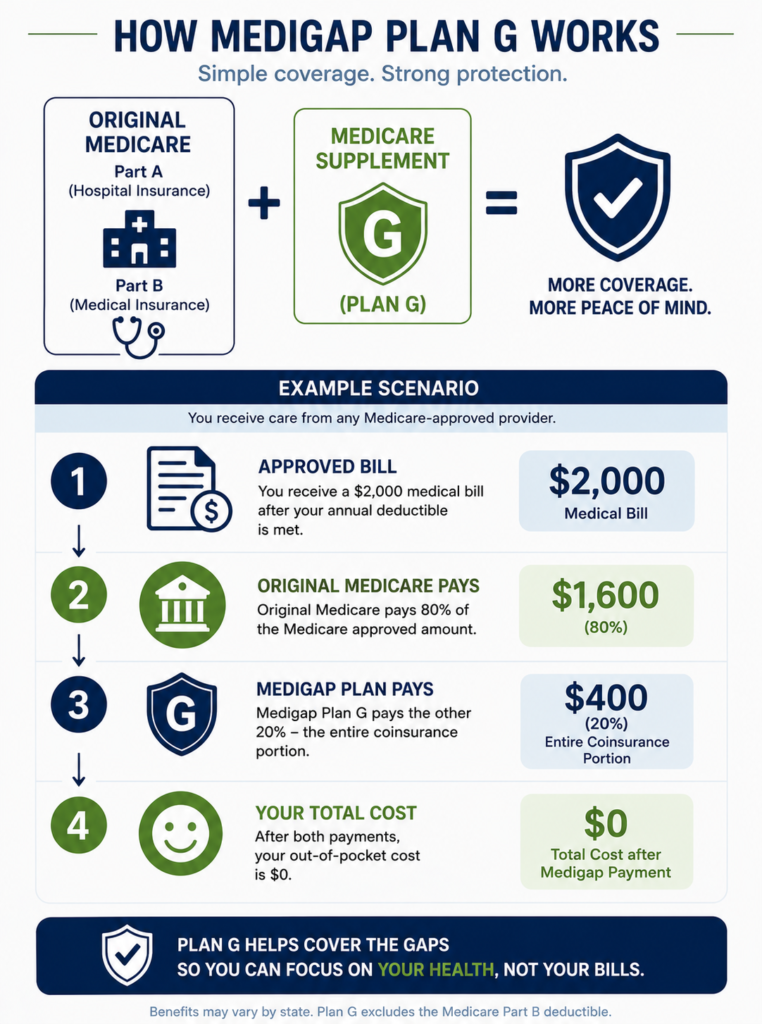
What Is Medicare Supplement?
A Medicare Supplement plan (also called Medigap) works with Original Medicare.
Instead of replacing Medicare, it helps pay certain out-of-pocket costs that Original Medicare doesn’t fully cover.
Many beneficiaries choose this approach because it generally provides greater provider flexibility and more predictable healthcare costs.
Most Medicare Supplement plans do not include prescription drug coverage, so many people also enroll in a separate Medicare Part D plan.
Comparing the Two Approaches
Provider Access
If keeping your current doctors is important, checking provider participation should be one of your first steps.
Many Medicare Advantage plans use provider networks.
Medicare Supplement plans generally allow you to receive care from any provider nationwide who accepts Medicare.
Monthly Costs
Many Medicare Advantage plans offer low or even $0 monthly plan premiums (although you generally continue paying your Medicare Part B premium).
Medicare Supplement plans typically have higher monthly premiums.
However, monthly premium alone doesn’t tell the whole story.
Out-of-Pocket Costs
Medicare Advantage plans generally include copayments or coinsurance when you receive healthcare services.
These plans also include an annual maximum out-of-pocket limit for covered medical expenses.
Medicare Supplement plans are designed to help reduce many Medicare cost-sharing expenses, which can make healthcare costs more predictable for some beneficiaries.
Prescription Drug Coverage
Many Medicare Advantage plans include prescription drug coverage.
Most Medicare Supplement plans require a separate Medicare Part D Prescription Drug Plan.
Extra Benefits
Many Medicare Advantage plans include additional benefits such as:
Medicare Supplement plans generally focus on helping pay Medicare cost-sharing and do not typically include these routine extra benefits.
Which Option Fits Your Lifestyle?
Medicare Advantage May Appeal to You If:

Medicare Supplement May Appeal to You If:
Neither list determines which option is “better.”
They’re simply starting points for your decision-making process.
Myth vs. Fact
Myth: Medicare Advantage is always better because it includes more benefits.
Fact: Extra benefits can be valuable, but your doctors, prescriptions, provider access, expected healthcare needs, and total healthcare costs are often even more important considerations.
Helpful Medicare Terms
Original Medicare — Medicare Part A and Part B provided by the federal government.
Medicare Advantage (Part C) — A private health plan approved by Medicare that provides your Medicare-covered benefits.
Medicare Supplement (Medigap) — Private insurance that helps pay certain out-of-pocket costs associated with Original Medicare.
Maximum Out-of-Pocket — The most you generally pay for covered medical services in a plan year under a Medicare Advantage plan.
Before deciding between Medicare Advantage and Medicare Supplement, consider:
These questions can help narrow your options and lead to a more informed decision.
Is Medicare Advantage the same as Medicare?
No. Medicare Advantage is one way to receive your Medicare-covered benefits through a private insurance company approved by Medicare.
Can I have both Medicare Advantage and Medicare Supplement?
Generally, no. You cannot be enrolled in both at the same time.
Which option costs less?
That depends on your healthcare usage, prescriptions, provider preferences, and the specific plans available where you live. Looking at your total expected healthcare costs…not just the monthly premium…is usually the best approach.
Which option gives me more flexibility?
Many Medicare Supplement plans generally offer greater provider flexibility because they work with Original Medicare and are accepted by providers nationwide who accept Medicare. Medicare Advantage plans typically use provider networks.
Key Takeaways
✅ Medicare Advantage and Medicare Supplement are two different approaches to receiving Medicare benefits.
✅ Neither option is automatically better for everyone.
✅ The right choice depends on your healthcare needs, doctors, prescriptions, budget, and lifestyle.
✅ Compare total healthcare costs…not just monthly premiums.
✅ Understanding your options before enrolling leads to more confident decisions.
Continue Your Medicare Journey
Now that you understand the two primary Medicare coverage options, it’s time to learn how to avoid some of the most common…and potentially costly…Medicare mistakes.
Next Featured Medicare Resource:
7 Medicare Mistakes That Could Cost You Money (And How to Avoid Them)
Need Personalized Guidance?
Choosing between Medicare Advantage and Medicare Supplement is one of the most important Medicare decisions you’ll make.
While this guide provides educational information, the best choice depends on your unique circumstances.
At Help465, our mission is simple:
Education before enrollment.
We’ll help you understand your options, answer your questions, and compare plans based on your healthcare needs…not sales pressure.
Because the right Medicare decision begins with understanding.

Reading Time: 10–12 Minutes
Difficulty: Beginner
Introduction
Enrolling in Medicare is one of the most important healthcare decisions you’ll make.
Unfortunately, many people make decisions based on television commercials, advice from friends, or incomplete information. Others wait until the last minute and feel pressured to choose a plan before they fully understand their options.
The good news?
Most Medicare mistakes are completely avoidable.
By learning what they are before you enroll, you can make informed decisions with greater confidence and reduce the likelihood of unexpected costs or unnecessary frustration later.
At Help465, we believe education should always come before enrollment…and avoiding common mistakes is one of the best places to start.

⚠️Help465 Heads-Up #1
Waiting Until the Last Minute
Many people don’t begin learning about Medicare until a few weeks before their 65th birthday.
By then, they may be overwhelmed by mail, advertisements, and deadlines.
A Better Approach
Start learning several months before you’re eligible.
Understanding your options early gives you time to compare plans, ask questions, and make thoughtful decisions without feeling rushed.
Medicare Minute
The earlier you learn about Medicare, the more choices you’ll have…not necessarily more plans, but more time to understand them.
⚠️Help465 Heads-Up #2
Assuming Enrollment Happens Automatically
One of the most common misconceptions is that everyone is automatically enrolled in Medicare.
That’s not always true.
Whether enrollment happens automatically depends on factors such as whether you’re already receiving certain Social Security or Railroad Retirement benefits.
A Better Approach
Find out whether you need to enroll yourself well before your Initial Enrollment Period ends.
⚠️Help465 Heads-Up #3
Choosing a Plan Before Checking Your Doctors
Many people compare plans based only on advertisements, television commercials, or monthly premiums.
Then they discover later that their preferred doctor isn’t in the network or that they misunderstood how their coverage works.
A Better Approach
Before enrolling, confirm:
Your relationship with your healthcare providers is too important to leave to chance.
⚠️Help465 Heads-Up #4
Ignoring Your Prescription Medications
Prescription drug coverage varies from plan to plan.
A plan that’s excellent for one person may not provide the best value for someone taking different medications.
A Better Approach
Before comparing plans, prepare:
Then compare how each plan covers your medications…not just whether it covers them.


⚠️Help465 Heads-Up #5
Focusing Only on the Monthly Premium
A lower monthly premium doesn’t always mean lower healthcare costs.
Plans can differ in deductibles, copayments, coinsurance, provider networks, prescription drug coverage, and other out-of-pocket expenses.
A Better Approach
Compare the total cost of coverage over the course of a year…not just the monthly payment.
Sometimes paying a little more each month can reduce your overall healthcare expenses.
Myth vs. Fact
Myth: The plan with the lowest premium is always the best value.
Fact: The best value depends on your healthcare usage, prescriptions, provider preferences, and total expected costs…not just your monthly premium.
⚠️Help465 Heads-Up #6
Never Reviewing Your Coverage Again
Many people enroll in Medicare and never look at their coverage again.
However, Medicare plans can change from year to year.
Provider networks, prescription drug formularies, premiums, copayments, and benefits may all change.
A Better Approach
Review your Medicare coverage annually to make sure it still meets your healthcare needs.
Reviewing your plan doesn’t mean you have to change it…it simply helps ensure it’s still the right fit.
⚠️Help465 Heads-Up #7
Letting Advertisements Make the Decision for You
Television commercials, postcards, and online advertisements often highlight attractive features like dental benefits, vision coverage, grocery allowances, or low premiums.
While these benefits can be valuable, they don’t tell the whole story.
A Better Approach
Choose your Medicare coverage based on:
Advertisements can introduce you to Medicare options, but they shouldn’t replace education.

Provider Network — The doctors, hospitals, and healthcare providers contracted with a particular health plan.
Formulary — The list of prescription medications covered by a Prescription Drug Plan.
Copayment — A fixed amount you may pay for certain covered healthcare services.
Coinsurance — Your share of the cost of covered healthcare services.
Before enrolling, ask:
Taking a few extra minutes to answer these questions now can help prevent costly surprises later.
What is the biggest Medicare mistake people make?
There isn’t one mistake that affects everyone. However, waiting too long to learn about Medicare, missing enrollment deadlines, and choosing coverage without understanding how it works are among the most common.
Should I review my Medicare coverage every year?
Yes. Even if you’re satisfied with your current plan, reviewing your coverage annually helps ensure it still meets your healthcare needs.
Can advertisements tell me everything I need to know?
Advertisements may introduce you to Medicare options, but they don’t explain every detail. Comparing plans based on your individual healthcare needs is always important.
Key Takeaways
✅ Most Medicare mistakes can be avoided through education and preparation.
✅ Don’t wait until the last minute to begin learning about Medicare.
✅ Compare more than just monthly premiums.
✅ Always review your doctors, medications, and expected healthcare needs before enrolling.
✅ Review your Medicare coverage each year to ensure it still fits your situation.
Continue Your Medicare Journey
Understanding Medicare is only part of the process.
Knowing when you can enroll…and when you can make changes…is just as important.
Next Featured Medicare Resource:
Understanding Medicare Enrollment Periods: A Complete Guide
Need Personalized Guidance?
Every Medicare decision is unique.
The purpose of this guide is to help you recognize common pitfalls before they become costly mistakes.
At Help465, we believe that informed decisions lead to better outcomes.
Whether you’re approaching age 65, retiring, or reviewing your current Medicare coverage, we’re here to provide honest guidance, trusted advice, and genuine care.
Because avoiding mistakes begins with understanding your options.

Reading Time: 12–15 Minutes
Difficulty: Beginner to Intermediate
Introduction
One of the biggest misconceptions about Medicare is that you can enroll or change your coverage whenever you choose.
In reality, Medicare has specific enrollment periods that determine when you can enroll, make changes, or switch plans.
The good news?
Once you understand which enrollment period applies to your situation, Medicare becomes much easier to navigate.
This guide explains the most common Medicare enrollment periods in plain language, helping you understand what they are, when they apply, and why they matter.

Why Enrollment Periods Matter
Choosing the right Medicare coverage is important.
Choosing it at the right time is just as important.
Missing an enrollment deadline could lead to delayed coverage or, in some situations, late enrollment penalties.
Fortunately, Medicare provides different enrollment opportunities depending on your life circumstances.
Let’s look at the situations that apply most often.
I’m Turning 65
For many people, Medicare begins with the Initial Enrollment Period (IEP).
This enrollment window generally lasts seven months:
This is typically the first opportunity to enroll in Medicare and begin comparing your coverage options.
Starting early gives you time to learn about Medicare without feeling rushed.
Help465 Heads-Up ⚠️
Don’t wait until your birthday month to begin learning about Medicare.
Starting a few months early gives you more time to understand your options, compare plans, and avoid unnecessary stress.
I’m Still Working
Many people continue working after turning 65.
If you have health insurance through your employer…or through your spouse’s employer…you may have additional Medicare enrollment options.
Whether you should enroll immediately or delay certain parts of Medicare depends on factors such as:
Because every situation is different, it’s important to review your circumstances before making enrollment decisions.
I’m Retiring After Age 65
Retirement often changes your Medicare timeline.
If you delayed Medicare because you had qualifying employer coverage, retiring may trigger a Special Enrollment Period (SEP).
This enrollment opportunity generally allows eligible individuals to enroll in Medicare after their employer coverage ends without certain late enrollment penalties.
Understanding your deadlines before leaving employer coverage can help prevent gaps in healthcare coverage.
Medicare Minute
Retirement doesn’t automatically mean you’ve missed your opportunity to enroll in Medicare.
Many people qualify for a Special Enrollment Period after leaving qualifying employer coverage.


I Already Have Medicare, but I Want to Change My Plan
Medicare recognizes that your healthcare needs can change over time.
Each year, eligible beneficiaries have an opportunity to review and, if appropriate, change their Medicare coverage during the Annual Enrollment Period (AEP).
Depending on your situation, you may be able to:
Reviewing your coverage each year helps ensure your plan continues to meet your healthcare needs.
I’m Already Enrolled in a Medicare Advantage Plan
If you’re currently enrolled in a Medicare Advantage plan, Medicare provides an additional enrollment opportunity early each year.
During the Medicare Advantage Open Enrollment Period (MA OEP), eligible beneficiaries may generally:
This enrollment period provides additional flexibility for people who decide their current Medicare Advantage plan no longer meets their needs.
I Recently Moved
Moving may affect your Medicare coverage.
If you move outside your current plan’s service area…or experience another qualifying life event…you may qualify for a Special Enrollment Period.
Because eligibility depends on your individual circumstances, it’s important to review your options as soon as possible after moving.
I Think I Missed My Enrollment Period
If you believe you’ve missed an enrollment opportunity, don’t panic.
Depending on your circumstances, you may still have options.
The next available enrollment period depends on:
Understanding your situation is the first step toward identifying your next opportunity.
Myth vs. Fact
Myth: If I miss one Medicare enrollment deadline, I can never enroll.
Fact: Many people still have future enrollment opportunities. The next available option depends on your individual circumstances.

Initial Enrollment Period (IEP) — The first Medicare enrollment opportunity for many people turning 65.
Special Enrollment Period (SEP) — An enrollment opportunity triggered by certain qualifying life events.
Annual Enrollment Period (AEP) — A yearly opportunity for eligible beneficiaries to review and make certain Medicare coverage changes.
Medicare Advantage Open Enrollment Period (MA OEP) — An additional enrollment period for individuals already enrolled in a Medicare Advantage plan.
Before making Medicare enrollment decisions, ask:
These questions often determine which Medicare enrollment period applies to your situation.
Can I enroll in Medicare anytime?
Not usually. Medicare has specific enrollment periods based on your eligibility and circumstances.
What if I miss my Initial Enrollment Period?
Depending on your situation, you may have future enrollment opportunities or qualify for a Special Enrollment Period.
Should I review my Medicare coverage every year?
Yes.
Even if you’re satisfied with your current plan, reviewing your coverage annually helps ensure it still meets your healthcare needs.
What if I don’t know which enrollment period applies to me?
Many people aren’t sure…and that’s okay.
Understanding your personal situation is often the best place to begin.
Key Takeaways
✅ Medicare has several enrollment periods designed for different life situations.
✅ Knowing which enrollment period applies to you can help prevent delays and unnecessary penalties.
✅ Retirement, moving, and changes in health coverage may create additional enrollment opportunities.
✅ Reviewing your Medicare coverage each year is an important part of maintaining the right healthcare coverage.
✅ When in doubt, ask questions before making Medicare decisions.
Continue Your Medicare Journey
Understanding when you can enroll is only part of the picture.
The next step is understanding what Medicare may cost and how different healthcare expenses work together.
Next Featured Medicare Resource:
Understanding Medicare Costs: Premiums, Deductibles, Copayments & More
Need Personalized Guidance?
Every Medicare timeline is different.
This guide explains the most common enrollment periods, but your specific circumstances may affect which enrollment opportunities are available to you.
At Help465, we’re committed to helping you understand your Medicare timeline before making important healthcare decisions.
Because the best Medicare decisions begin with understanding…not guessing.

Reading Time: 12–15 Minutes
Difficulty: Beginner
Introduction
One of the first questions people ask about Medicare is:
“How much is this going to cost me?”
It’s a fair question…but the answer isn’t always as simple as one dollar amount.
Medicare costs can include monthly premiums, deductibles, copayments, coinsurance, prescription drug costs, and other out-of-pocket expenses. The amount you pay depends on several factors, including the type of Medicare coverage you choose, your healthcare needs, and whether you qualify for financial assistance.
The good news is that Medicare costs become much easier to understand once you learn how the different pieces fit together.
This guide explains the most common Medicare costs in plain English so you can make informed healthcare decisions with confidence.

Understanding Medicare Costs
When people think about healthcare costs, they often focus only on the monthly premium.
While monthly premiums are important, they’re only one part of the overall picture.
Your healthcare expenses may include:
Understanding each of these terms can help you compare Medicare options more effectively.
What Is a Premium?
A premium is the amount you generally pay each month to maintain certain Medicare coverage.
Think of it as your monthly membership fee.
Some parts of Medicare may not require a monthly premium if you meet certain eligibility requirements, while others generally do.
What Is a Deductible?
A deductible is the amount you may pay for covered healthcare services before certain Medicare coverage begins paying its share.
Some deductibles apply annually, while others depend on the type of Medicare coverage you have.
Understanding when deductibles apply can help you better anticipate your healthcare expenses.
What Is a Copayment?
A copayment (often called a “copay”) is a fixed dollar amount you may pay for certain healthcare services.
Examples may include:
The amount depends on your Medicare coverage and the service you receive.
What Is Coinsurance?
Coinsurance is your share of the cost of covered healthcare services.
Instead of paying a fixed dollar amount, you pay a percentage of the approved cost.
Because coinsurance is percentage-based, the amount you pay may vary depending on the healthcare service you receive.
Medicare Minute 💡
A low monthly premium doesn’t automatically mean lower healthcare costs.
Sometimes paying a little more each month can reduce your total healthcare expenses over the course of the year.
Maximum Out-of-Pocket Costs
Some Medicare coverage options include an annual maximum out-of-pocket limit for covered medical expenses.
Once that limit is reached, the plan generally pays covered medical costs for the remainder of the plan year according to the plan’s rules.
Understanding whether your Medicare coverage includes this protection is an important part of comparing your options.


Prescription Drug Costs
Prescription drug costs are another important part of your overall healthcare expenses.
Your costs may depend on factors such as:
Reviewing your medications before enrolling can help you better estimate your prescription drug costs.
Looking Beyond Monthly Premiums
One of the biggest Medicare mistakes is comparing plans based only on the monthly premium.
Healthcare costs involve much more than one number.
For example, two plans with different monthly premiums may have very different:
Looking at your expected healthcare costs over an entire year often provides a more complete picture than comparing monthly premiums alone.
Help465 Heads-Up ⚠️
The least expensive plan on paper isn’t always the least expensive plan in real life.
Always compare your expected total healthcare costs…not just your monthly premium.
Can Medicare Costs Be Lower?
Possibly.
Some individuals qualify for programs that help reduce Medicare-related expenses.
Depending on eligibility, assistance may be available through:
Many eligible individuals never apply simply because they don’t know these programs exist.
Exploring these programs may help lower your healthcare expenses if you qualify.
Questions to Ask Yourself
Before choosing Medicare coverage, ask:
These questions can help you compare plans based on your actual healthcare needs rather than advertisements.
Myth vs. Fact
Myth: Medicare is free.
Fact: While many people qualify for premium-free Medicare Part A, Medicare may still involve premiums, deductibles, copayments, coinsurance, prescription drug costs, and other healthcare expenses.

Premium — The monthly amount you generally pay to maintain certain Medicare coverage.
Deductible — The amount you may pay before certain Medicare coverage begins paying its share.
Copayment — A fixed dollar amount you may pay for certain covered healthcare services.
Coinsurance — Your share of the cost of covered healthcare services.
Maximum Out-of-Pocket — The most you generally pay for covered medical services during a plan year under certain Medicare coverage options.
Is Medicare free?
Not entirely.
While many people qualify for premium-free Medicare Part A, other parts of Medicare generally involve monthly premiums or out-of-pocket costs.
Why do Medicare costs change?
Medicare premiums, deductibles, and cost-sharing amounts may change from year to year.
Reviewing your Medicare coverage annually helps ensure you understand current costs and benefits.
Can someone help me pay Medicare costs?
Possibly.
Depending on your eligibility, programs such as Medicare Savings Programs, Extra Help, or Medicaid may help reduce certain Medicare expenses.
Is the plan with the lowest premium always the best?
Not necessarily.
It’s usually more important to compare your total expected healthcare costs than your monthly premium alone.
✅ Medicare costs involve more than just monthly premiums.
✅ Understanding deductibles, copayments, and coinsurance helps you compare plans more effectively.
✅ Prescription drug costs should always be part of your Medicare decision.
✅ Financial assistance programs may be available if you qualify.
✅ The best Medicare value depends on your healthcare needs…not simply the lowest monthly premium.
You’ve Completed the Five Featured Medicare Resources
Congratulations!
You’ve now explored the five cornerstone resources in the Help465 Learning Center:
✓ Turning 65? Everything You Need to Know Before You Enroll in Medicare
✓ Medicare Advantage vs. Medicare Supplement
✓ 7 Medicare Mistakes That Could Cost You Money
✓ Understanding Medicare Enrollment Periods
✓ Understanding Medicare Costs
These resources were created to help you build a strong foundation before making Medicare decisions.
Ready for the Next Step?
The Help465 Learning Center is just the beginning.
If you’d like to continue learning, visit the Help465 Medicare Academy, where we’ll guide you through Medicare step by step with lessons, practical examples, helpful tips, and easy-to-understand explanations designed to build your confidence.
Whether you’re just beginning your Medicare journey or preparing to enroll, the Academy is designed to help you learn at your own pace.
Need Personalized Guidance?
Every Medicare decision is personal.
While these resources provide educational information, your healthcare needs, prescriptions, doctors, and financial situation are unique.
At Help465, our commitment remains the same:
Education before enrollment.
We’re here to help you understand your options, answer your questions, and make informed decisions with confidence…without pressure.
Because when you understand Medicare, you’re better prepared to choose the coverage that’s right for you.