
Understanding When You Can Enroll in Medicare
Knowing when you can enroll in Medicare is just as important as understanding what Medicare covers.
Missing an enrollment deadline could result in delayed coverage or, in some situations, late enrollment penalties. Fortunately, Medicare offers several enrollment periods designed to fit different life circumstances.
Whether you’re turning 65, retiring, moving, or simply reviewing your current coverage, understanding your enrollment opportunities can help you make informed decisions with confidence.


Why Enrollment Periods Matter
One of the biggest misconceptions about Medicare is that you can enroll or change plans whenever you want.
In reality, Medicare has specific enrollment periods throughout the year. The enrollment period available to you depends on your individual circumstances.
Learning which enrollment period applies to your situation is one of the most important steps in avoiding unnecessary stress or unexpected costs.
Turning 65? Your Initial Enrollment Period (IEP)
For most people, their Medicare journey begins with the Initial Enrollment Period.
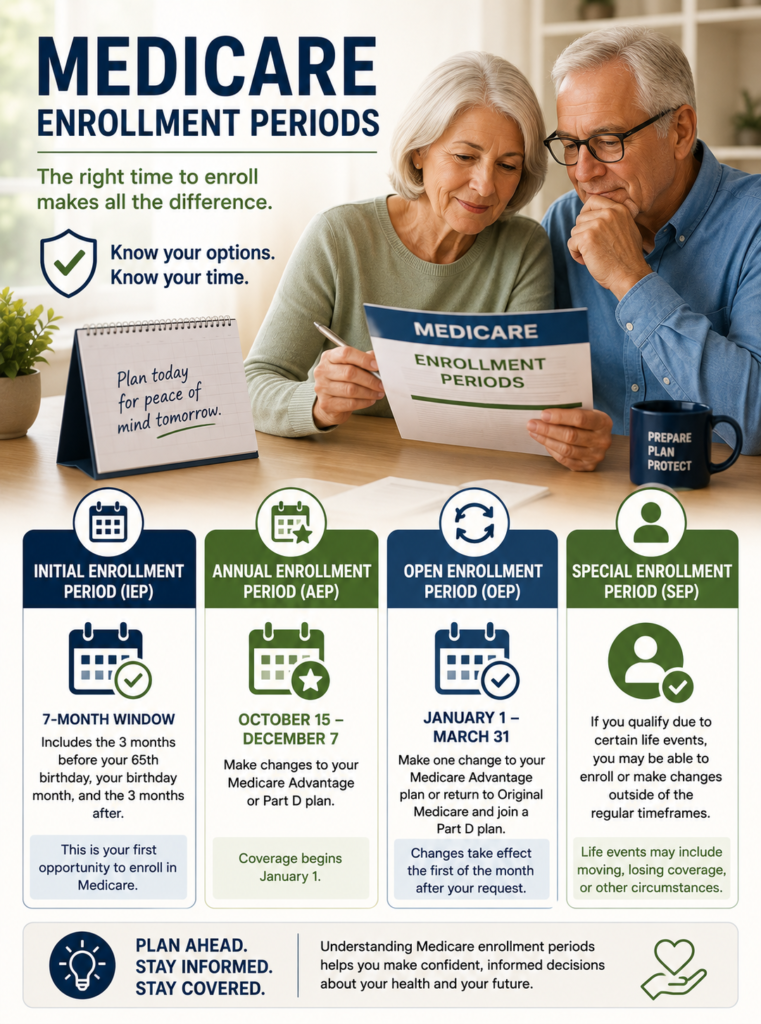
This enrollment window generally lasts seven months:
During this time, eligible individuals can generally enroll in Medicare Part A and Part B and explore additional coverage options such as Medicare Advantage, Medicare Supplement, and Prescription Drug Plans.
Planning ahead during this period can help ensure your coverage begins when you need it.
Still Working at Age 65?
Many people continue working after turning 65.
If you’re covered by a qualifying employer health plan, you may have the option to delay certain parts of Medicare without facing a late enrollment penalty.
Whether delaying Medicare is appropriate depends on factors such as:
Because these rules can be complex, reviewing your individual situation before making a decision is important.
Retiring After Age 65? Special Enrollment Period (SEP)
If you delayed Medicare because you had qualifying employer coverage, retiring may trigger a Special Enrollment Period.
This enrollment opportunity generally allows eligible individuals to enroll in Medicare after their employer coverage ends without certain late enrollment penalties.
Missing this enrollment opportunity could create gaps in coverage, so understanding your timeline is essential.
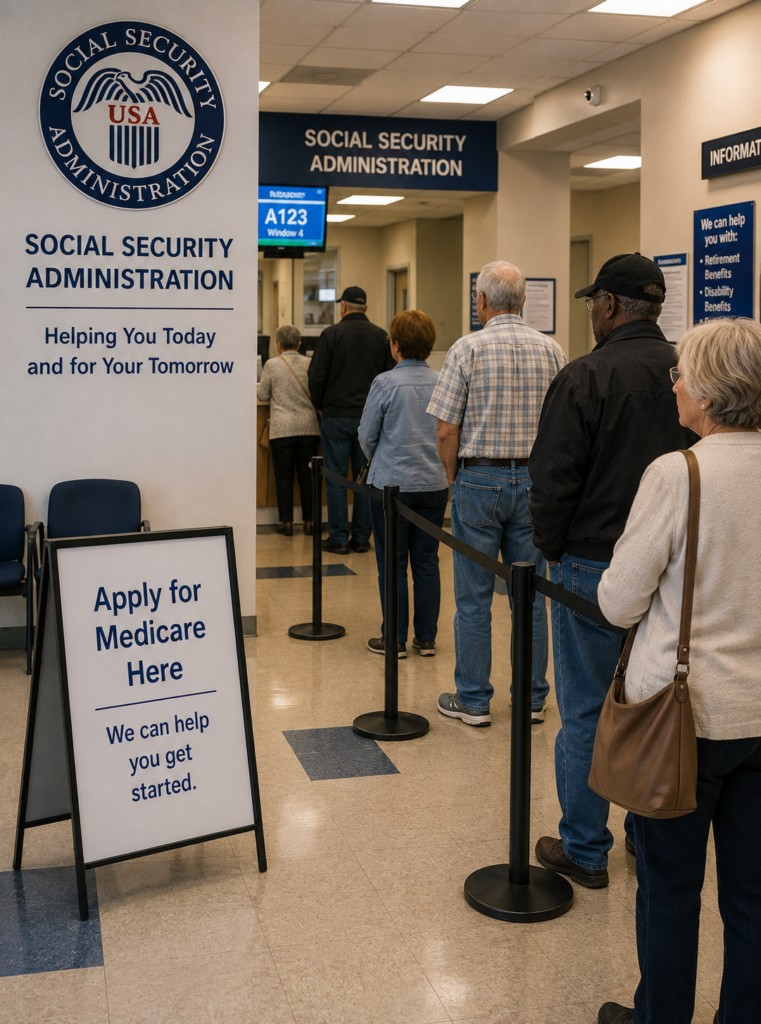

Special Enrollment Periods
Certain life events may qualify you for a Special Enrollment Period outside the standard enrollment windows.
Examples may include:
Eligibility depends on your specific situation and the type of life event involved.
What Happens If You Miss an Enrollment Period?
Missing an enrollment period doesn’t always mean you’ve lost your opportunity to enroll, but it can create challenges.
Depending on your circumstances, missing an enrollment deadline may result in:
Understanding your deadlines before they arrive is often much easier than correcting a missed opportunity later.
Questions to Ask Yourself
Before making Medicare enrollment decisions, consider:
The answers to these questions often determine which enrollment period applies to you.
Avoid Common Medicare Mistakes
Medicare can be complicated, especially when you’re hearing different advice from different sources.
Some of the most common mistakes include:
Many of these mistakes can be avoided simply by understanding your options before making a decision.
Questions to Ask Before Choosing a Medicare Plan
Every person’s healthcare needs are unique.
Before choosing any Medicare plan, consider asking yourself:
These questions can help narrow your options and make comparing plans much easier.
Can I enroll in Medicare anytime?
Not usually. Medicare has specific enrollment periods based on your eligibility and personal circumstances.
What if I missed my Initial Enrollment Period?
You may still have options depending on your circumstances. The next available enrollment opportunity depends on your individual situation.
Should I review my Medicare plan every year?
Yes. Even if you’re happy with your current plan, reviewing your coverage annually helps ensure it still meets your healthcare needs.
Will I pay a penalty if I enroll late?
Possibly. Some individuals qualify for Special Enrollment Periods that allow them to enroll without certain penalties, while others may face late enrollment penalties depending on their circumstances.
Medicare enrollment rules can feel complicated, especially when your situation doesn’t fit neatly into one category.
Our role is to help you understand which enrollment period applies to your circumstances, explain your options in plain English, and help you avoid common mistakes.
At Help465, we believe education should always come before enrollment.
Whether you’re enrolling for the first time, retiring after 65, or reviewing your current coverage, we’re here to provide honest guidance, trusted advice, and genuine care every step of the way.
Ready to Understand Your Medicare Timeline?
If you’re unsure when you should enroll, whether you’re eligible to make changes, or which enrollment period applies to your situation, we’re here to help.
Schedule a complimentary consultation and let Help465 help you understand your Medicare enrollment options with clarity and confidence.